
7 Popular Brazilian Drinks in the United States
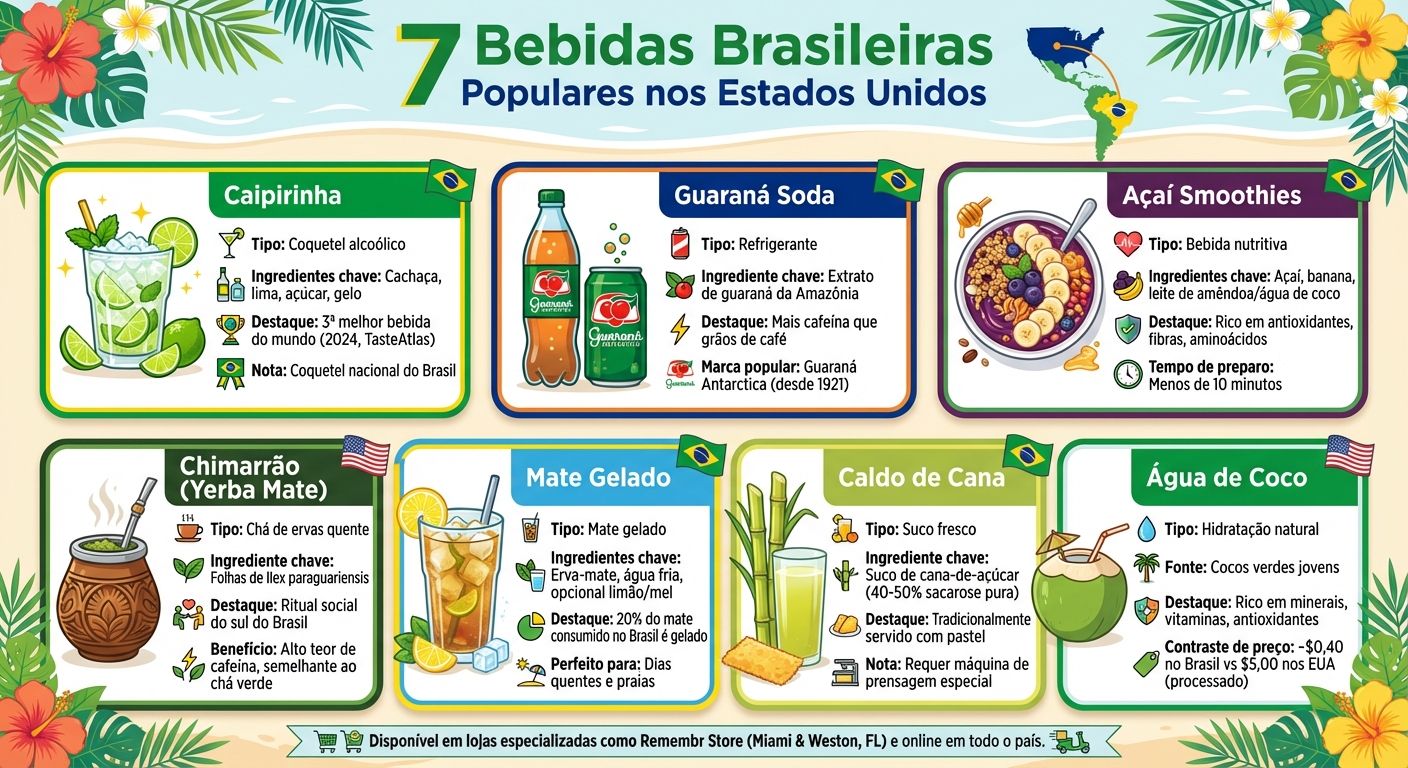
Brazilian drinks are gaining traction in the US, offering unique flavors and options for diverse palates. Here are 7 of the most sought-after:
- Caipirinha: Recognized as one of the best cocktails in the world, made with cachaça, lime, sugar, and ice.
- Guaraná Soda: A soft drink made from guaraná, famous for the Guaraná Antarctica brand.
- Açaí Smoothies: A nutritious and versatile drink, made with açaí and healthy ingredients.
- Chimarrão: A hot drink made from yerba mate, traditional in southern Brazil.
- Iced Mate: A cold version of mate, ideal for hot days and easy to prepare.
- Caldo de Cana: Sweet juice extracted from sugarcane, perfect with pastries.
- Coconut Water: Natural hydrator, popular on Brazilian beaches and available in industrialized versions in the US.
These drinks reflect Brazil's diversity and richness, each bringing a bit of history and local ingredients. Whether in stores like Remembr Store or specialty markets, it's possible to find these options and enjoy a piece of Brazil, even while in the United States.
7 Popular Brazilian Drinks in the United States: Quick Reference Guide
🔗 Brazilian drinks at the American store Total Wine in Orlando
1. Caipirinha
The caipirinha, Brazil's national cocktail, is one of the most celebrated drinks in the world. In 2024, the specialized website TasteAtlas ranked it as the third best drink in the world, as well as highlighting it as the best Brazilian drink. Since 2003, caipirinha has been recognized as Brazilian Cultural Heritage and is also included in the list of official cocktails of the International Bartenders Association (IBA), in the Contemporary Classic category.
The traditional recipe is incredibly simple: cachaça, lime, sugar, and ice. The secret lies in muddling the lime with sugar directly in the glass, a process that releases essential oils and intensifies the flavor before adding the cachaça and ice. For genuine preparation, the use of granulated sugar is fundamental, as the crystals help extract the juices and oils from the lime during muddling, something that simple syrup cannot replicate.
What makes caipirinha unique is cachaça, its alcoholic base. Produced from 100% fresh sugarcane juice, it gives the drink a distinct profile that differentiates it from other cocktails. The artisanal production of cachaça in Brazil is impressive, reaching between 1 and 1.5 billion liters per year, with an annual growth of 15%.
In the United States, brands like Leblon and Novo Fogo have facilitated access to cachaça, making it available in liquor stores and supermarkets. These brands offer options with light and fruity flavors, perfect for beginners, before exploring more intense and earthy versions. If cachaça is not available, Rhum Agricole is the closest alternative, followed by white rum.
This growing popularity in the US reflects how Brazilian flavors are gaining global traction. Caipirinha is not just a drink; it carries the essence of Brazilian tradition and connects people around the world with an authentic taste of Brazil.
2. Guaraná Soda
Guaraná soda is a soft drink that carries the essence of Brazil. Produced from the extract of the guaraná plant (Paullinia cupana), native to the Amazon, it combines notes of apple and red berries. Additionally, its seeds have a higher caffeine content than coffee beans, providing a natural energy boost. This unique combination has gained ground in the American market.
In the United States, Guaraná Antarctica is the best-known brand. Created in 1921, it has been the absolute leader in Brazil for over a century. The drink attracts consumers looking for a more natural alternative to traditional sodas.
"I love using Guaraná ANTARCTICA as a natural energy boost after workouts – it tastes great and feels healthier than typical sodas or energy drinks."
If you want to try it, Guaraná Antarctica can be found at World Market stores for about $1.49. It is highly rated, with a score of 4.9 out of 5 stars based on 154 reviews. For online purchases, Seabra Foods offers Guarana Brasilia for $1.39 (regular price $2.39), with a physical store in Newark, NJ. Another option is Amazonas Foods, which sells BRASILIA Guaraná Soda for prices between $3.29 and $3.99, shipping directly from California. Besides being consumed plain, guaraná soda is quite versatile and can be used in creative cocktail recipes.
"I love experimenting with Guaraná ANTARCTICA in cocktails – its unique flavor adds an exciting twist that my guests always ask about!"
Whether served chilled, plain, or as part of a special recipe, guaraná soda brings the freshness and flavor of Brazil to your home.
3. Açaí Smoothies
Açaí, an Amazonian superfood packed with antioxidants, fiber, essential amino acids, and monounsaturated fatty acids, has conquered the United States thanks to its unique flavor and health benefits. In recent years, açaí smoothies and bowls have gained popularity, appearing in cafes and juice bars across the country.
In the United States, açaí preparation has taken on a healthier twist, with less sugar and a variety of nutritious toppings, such as chia, hemp seeds, cacao nibs, goji berries, and coconut flakes. Additionally, creative options have emerged, such as "Green Açaí Bowls," which incorporate ingredients like kale or spinach. This lighter, more nutritious approach has earned praise from experts.
"Açaí in particular is getting noticed here for its antioxidant properties and fiber content. It also provides a complete complex of essential amino acids and is rich in monounsaturated fatty acids. Other Amazonian fruits have similar health benefits, but the flavor (of açaí) is good too, and that’s why I think Americans are embracing them." - Pedro Robin, owner of Brazil Cafe in Berkeley
Açaí's popularity in the US began with Sambazon, a company founded by two surfers in Dana Point, which pioneered the export of this fruit to the country. Since then, the brand has expanded its presence in various juice bars and supermarkets. Today, frozen açaí pulp is easy to find in chains like Whole Foods and even in local Brazilian markets. For those who enjoy making smoothies at home, the recipe is simple: blend frozen pulp with banana, almond milk or coconut water, and finish with granola and fresh fruit. In less than 10 minutes, you have a delicious and nutritious meal.
If convenience is key, Tropical Tribe, located at the Discovery Bay Center in Waikiki, Hawaii, serves authentic Brazilian-style açaí bowls. Meanwhile, Remembr Store offers authentic Brazilian products, including ingredients to prepare your own recipes. With stores in Miami and Weston, Florida, the store also delivers nationwide, making açaí accessible to even more people.
4. Chimarrão (Yerba Mate)
Chimarrão is a traditional South American drink, especially popular in southern Brazil, in states such as Paraná, Santa Catarina, and Rio Grande do Sul. Made with dried leaves of Ilex paraguariensis (yerba mate) and hot water, it is served in a gourd with a bombilla. More than a simple drink, chimarrão is a social ritual. The gourd is shared among friends, passing from hand to hand in environments such as schools, shopping malls, and other public spaces. In addition to strengthening social connections, chimarrão also offers health benefits, similar to green tea, due to its high caffeine concentration.
In the United States, chimarrão is becoming more accessible, accompanying the growing popularity of Brazilian products. In December 2025, Circle of Drink offers "Brazil Traditional Yerba Mate Tea - 100% Certified Organic" for $14.99 (16 oz/454g) on Amazon.com, standing out as a company that has provided "the highest quality yerba mate and accessories for over a decade." Other brands, such as Yerba Madre, are also available in large retail chains, such as CVS, Whole Foods, Walmart, Publix, and Safeway, with delivery options through services like Instacart and DoorDash.
To prepare chimarrão, you will need a gourd and a bombilla, easily found on Amazon or in stores specializing in organic products. When choosing yerba mate, opt for Brazilian brands such as Ximango, Madrugada, and Barão de Cotegipe, known for their quality. The herb should have a vibrant green color and be sugar-free, to preserve the authentic flavor. Avoid herbs sold in tea bags, as they are not suitable for traditional chimarrão preparation.
If you are in Florida, the Remembr Store, with units in Miami and Weston, offers yerba mate and chimarrão accessories, in addition to nationwide delivery. Thus, chimarrão is not just a drink; it connects lovers of Brazilian culture to the traditions of southern Brazil, providing an experience that goes beyond taste.
sbb-itb-093494e
5. Iced Mate
Iced mate is a refreshing and adapted version of traditional mate, consumed as a non-carbonated beverage in Brazil. Unlike hot chimarrão, it is served well chilled and often combined with ingredients like milk, water, sugar, caramelized sugar, lemon juice, or lime juice. Approximately 20% of mate consumed in Brazil is in its iced form, being especially popular on beaches, where it stands out as a light and invigorating option for hot days.
In the United States, preparing iced mate at home is quite simple. Yerba mate can be found in stores like Whole Foods or on Amazon. For example, in December 2025, Circle of Drink offers "Brazil Traditional Yerba Mate Tea - 100% Certified Organic" for US$14.99 (16 oz/454g, or US$0.94 per ounce) on Amazon.com. This product has a rating of 4.1 out of 5 stars based on 16 reviews. The instructions on the packaging suggest: "Serve hot immediately or refrigerate for iced mate."
To prepare a cold brew, simply mix 1 tablespoon of yerba mate per cup of cold water, cover, and refrigerate for 8 to 12 hours. Then, strain and serve with ice. If you prefer a more intense flavor, prepare hot mate with water at 70–80°C (158–176°F), let it steep for 4 to 7 minutes, strain, and pour over plenty of ice.
To add a special touch, add lemon juice, mint, honey, or even pineapple. When served chilled, the earthy and herbal flavor of yerba mate becomes milder, making it a perfect choice to cool down on hotter days.
6. Caldo de Cana (Sugarcane Juice)
Caldo de cana, or garapa, is a drink made from the juice extracted from sugarcane and is a true symbol of Brazilian cuisine. To prepare it, peeled sugarcane stalks are placed in a machine that crushes them between two wheels, releasing a greenish-yellow liquid, known for its extremely sweet taste. This liquid contains between 40–50% pure sucrose.
As Fletcher Huntley highlights:
"Given that most of the world's sugar comes from Brazil, it's fitting that the country also produces some fiercely sweet beverages. With its long history of sugar production, sweetened drinks are practically part of the Brazilian DNA – and it doesn't get much sweeter than caldo de cana."
The taste of caldo de cana is distinctive: just the right amount of sweetness, with a light touch of freshness that resembles grass. Tradition dictates that it be served very cold, often alongside a warm pastel, a classic of Brazilian gastronomy.
In the United States, finding fresh caldo de cana can be a challenge. This is because preparation requires a specific pressing machine, something rare in American homes. For those looking to try this authentic delight, the best option is to visit Brazil, where it is common to find street stalls and fairs offering the fresh drink throughout the country. Caldo de cana is yet another proof of the richness of Brazilian flavors that enchant palates around the world.
7. Coconut Water
Coconut water is practically a symbol of tropical Brazil. There, it's common to see people enjoying this drink straight from green coconuts, with a simple straw – a practice that is part of daily life. Brazilians prefer green coconuts because they contain more water, ideal for refreshing oneself.
On the country's beaches and sidewalks, vendors cut the top of green coconuts in front of customers, offering a natural drink, full of minerals, vitamins, and antioxidants. And the best part? All this for about two reais. While in Brazil, consumption is fresh and direct, in the United States, coconut water usually comes in industrialized versions.
There, a bottle of processed coconut water costs, on average, US$5.00. Many Brazilians living in the US complain about the taste of these versions, describing them as "processed, sugary water that tastes like old coconut." In the 1980s, GOYA® was one of the first brands to bring 100% pure coconut water to the American market. They use young green coconuts from Southeast Asia and promote the five essential electrolytes present in the drink. Even so, the authentic experience that exists in Brazil is difficult to replicate.
For those looking to experience the genuine taste of Brazilian coconut water in the United States, the challenge is significant. Fresh drinks like this are difficult to import, and when available, they end up being expensive. This pursuit of authenticity, incidentally, is something that connects all the drinks mentioned in this article, offering American consumers a taste of true Brazilian culture.
Where to Buy and How to Make Brazilian Drinks in the US
In the United States, especially in states like Florida, Massachusetts, California, New Jersey, and New York, it has become much easier to find authentic Brazilian drinks. A great place to start is the Remembr Store, which offers a wide variety of genuine products, such as fruit pulps for açaí smoothies and other essential ingredients. If you prefer to visit a physical store, you can go to 2344 NE 2nd Ave, Miami, FL 33137 or 1396 SW 160th Ave, Sunrise, FL 33326. For those who prefer the convenience of online shopping, the website remembrstore.com delivers nationwide. Shipping for non-perishable items starts at US$10.90, while general shipping costs US$13.90 for most states and US$14.90 for Alaska and Hawaii. Additionally, there is an option for free in-store pickup in Weston.
If you're thinking of making your favorite drinks at home, a classic caipirinha is always a good choice. For this, you'll need 1/2 fresh lime cut into quarters, 1 to 2 teaspoons of refined sugar, and 2 ounces (oz) of cachaça. The preparation is simple: place the lime pieces and sugar in a glass, muddle well with a pestle to release the flavors, add the cachaça and ice, and serve immediately without straining. This recipe is practical and preserves the authentic flavor, even when far from Brazil.
If you prefer to try these ready-made drinks, there are good options in Miami. Boteco Miami, located at 916 NE 79th Street, serves Guaraná soda, Diet Guaraná, coconut water, and various fresh juices. For frozen items, such as açaí pulps, check the Remembr Store's shipping table to calculate the shipping cost to your region. Whether buying ingredients or trying them at restaurants, it's possible to keep the taste of Brazil very close to you.
Conclusion
Brazilian drinks bring a special blend of tradition and flavor that reflects Brazil's vibrant lifestyle. They are not only part of the country's cuisine but also carry traces of the Portuguese, African, and Indigenous influences that have shaped Brazilian culture over the centuries. Each drink tells a story, going far beyond a simple refreshment, and connects deeply with daily life, celebrations, and regional customs.
Trying these drinks is a genuine way to explore Brazilian flavors and traditions, even while in the United States. From the freshness of guarana to the energy of açaí and the tropical sweetness of coconut water, each option offers a unique experience that expands the palate and immerses you in Brazil's cultural richness.
Today, these drinks are more accessible in the U.S. thanks to the increased availability of authentic ingredients, such as cachaça. Whether preparing a classic caipirinha at home, savoring an iced mate, or trying an açaí smoothie, there are countless ways to experience the flavors of Brazil. With alcoholic and non-alcoholic options for all occasions, each sip is a celebration of Brazilian culture. And with the help of Remembr Store, finding these authentic ingredients anywhere in the country becomes even easier.
FAQs
What are the main health benefits of açaí smoothies?
Açaí smoothies are a delicious and nutritious option to enjoy the benefits of this fruit packed with antioxidants. These compounds help protect cells against damage caused by free radicals, which can reduce the risk of inflammation and chronic diseases, such as heart problems and neurodegenerative conditions. Additionally, açaí is a good source of fiber, which aids digestion and can help lower LDL cholesterol levels, promoting heart health.
Açaí is also rich in omega-3 and omega-6, healthy fats that play an important role in the proper functioning of the body. It also offers vitamins such as A, C, and E, as well as minerals that help strengthen the immune system. Preparing an açaí smoothie at home is simple and practical: just use frozen pulp, combine with milk or water, and sweeten with natural options like honey or guarana syrup. It’s a tasty way to incorporate these nutrients into your daily diet in the United States.
How to make an authentic Brazilian caipirinha at home?
To make a classic caipirinha, you will need lime, sugar, cachaça, and ice. Start by cutting 1 lime into four pieces and placing them in a glass. Add 1 to 2 teaspoons of refined sugar (adjust to your preference) and use a muddler to gently crush, extracting the juice and oils from the peel.
Then, add 2 ounces (about 60 ml) of cachaça to the mixture and fill the glass with ice cubes. Stir well with a long spoon or, if you prefer, transfer everything to a shaker, shake, and return to the glass. For an extra touch, a splash of lime juice can be added before serving. Now, just enjoy this refreshing and flavorful drink!
Where can I buy ingredients to prepare Brazilian drinks in the U.S.?
You can find ingredients to prepare Brazilian drinks in the United States in online stores, Latin markets, and large supermarket chains. Websites like Hi Brazil Market offer items such as cachaça, guarana, açaí pulp, and typical syrups, with delivery anywhere in the country. Additionally, local markets that cater to the Latino community often have these products, especially in areas with a large Brazilian population.
If you prefer to buy in person, chains like Whole Foods and Trader Joe’s often offer frozen açaí and guarana sodas in the international products section. Liquor stores, such as Total Wine & More, usually carry cachaça and other traditional ingredients. Fresh or frozen fruits, such as passion fruit and acerola, can be found in the exotic or frozen foods sections.
With so many options available, you can easily prepare caipirinhas, juices, and other Brazilian drinks without leaving the United States!