


5 Best Substitutes for Brazilian Ingredients in the USA
Preparing Brazilian dishes in the United States can be challenging due to the lack of typical ingredients. But don't worry! Here are 5 practical substitutes to recreate Brazilian recipes using products found in American markets:
- Cassava Flour → Fine Cornmeal: Ideal for farofa, although the texture will be different. Available in supermarkets.
- Carioca Beans → Pinto Beans: Very similar in taste and texture, easy to find.
- Minas Cheese → Mozzarella or Queso Fresco: Great for pão de queijo (cheese bread), with a soft texture and mild flavor.
- Guarana Powder → Instant Coffee or Vanilla Syrup: Alternatives for desserts and beverages.
- Jambu/Tucupi → Cilantro or Apple Cider Vinegar: Although they don't reproduce the original taste or sensation, they are good options for dishes inspired by Northern Brazil.
These substitutes help bring a taste of Brazil to your table, even outside the country. Check out more details about each swap below!
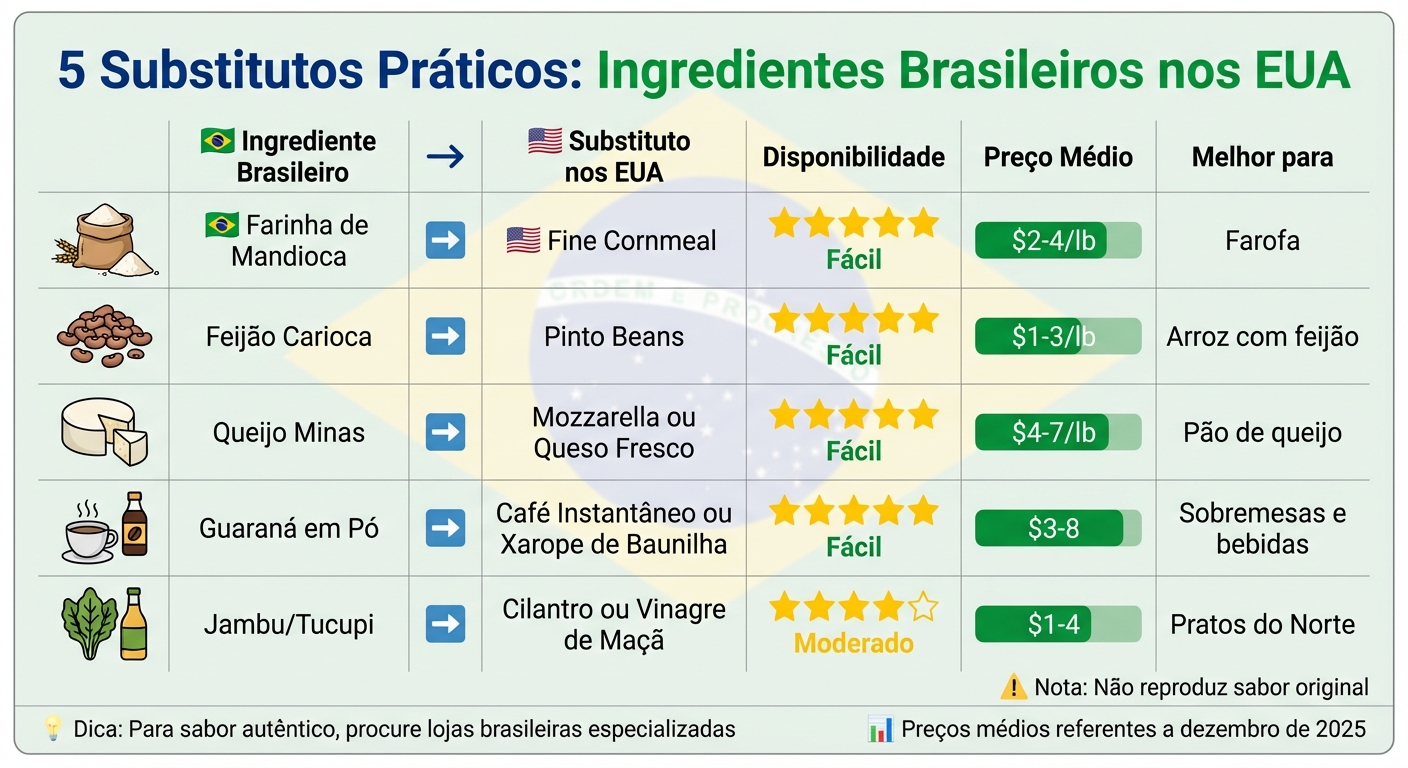
Table of Brazilian Ingredient Substitutions in the USA
1. Fine Cornmeal instead of Cassava Flour
Cassava flour is indispensable in preparing farofa, ensuring its unmistakable texture and a distinct flavor when toasted with oil, butter, and salt. Carolina Santos-Neves, Chef and Co-owner of Comodo and Colonia Verde restaurants, describes it:
"The result is something that is more about texture than flavor, but it has a wonderful salty, buttery flavor."
Availability in US Supermarkets
Fine cornmeal (yellow fine cornmeal) is widely available in American supermarkets. However, it has a different texture and behavior than cassava flour, which can alter the final result of recipes.
How to Substitute in Brazilian Recipes
If you want to preserve the authenticity of farofa, it is ideal to look for cassava flour in Latin markets or online stores. Brands like Goya often offer the original product. Although fine cornmeal is a practical alternative, it does not deliver the unique texture that cassava flour provides.
Check out the next substitute to discover more accessible options in the US.
2. Pinto Beans instead of Carioca Beans
Carioca beans are a classic of Brazilian cuisine, but in the US, pinto beans emerge as a practical alternative to compose rice and beans. Despite their differences, pinto beans can fulfill this role well.
Culinary Use
Pinto beans have a texture very similar to carioca beans and easily absorb typical Brazilian seasonings. Although they are more popular in the US, they also have a place at the Brazilian table, being widely used in soups, broths, and, of course, in the traditional dish with rice and grilled meat. This makes them a versatile choice for those who want to keep the taste of home, even outside Brazil.
Ease of Finding in the US
In the United States, finding pinto beans is not difficult. They are available in practically any supermarket or can be purchased online, on sites like Amazon. In addition, Brazilian supermarkets located in the US often offer a good variety of beans, ensuring that you can choose the type that best suits your taste.
Economy and Practicality
With an affordable price and easy availability, pinto beans are ideal for simple and nutritious meals, such as the famous Brazilian "prato feito" (daily special). Being inexpensive to produce, they continue to be an economical choice for everyday life, without sacrificing traditional flavor.
Check out the next suggestion for another practical alternative in the US.
3. Queso Fresco or Mozzarella instead of Cheese for Pão de Queijo
If you're looking for practical alternatives to make pão de queijo in the United States, here are some options that can substitute traditional Minas cheese.
Original pão de queijo uses Minas cheese, but both queso fresco and mozzarella are great alternatives. These cheeses can recreate the soft texture and mild flavor that make pão de queijo so special.
Flavor Similarity to Minas Cheese
Minas cheese is known for being fresh, white, and mild. Queso fresco, although slightly saltier, and low-moisture part-skim mozzarella can mimic the elastic texture and characteristic melt of the original cheese well. American mozzarella, which is quite similar to Brazilian mozzarella, also offers that perfect melt that makes all the difference in pão de queijo.
Availability in US Supermarkets
The good news is that finding these cheeses in the United States is very easy. Queso fresco is usually in the dairy or yogurt section of most supermarkets and can also be purchased at Costco. Mozzarella is even more common, available in practically any American market. This makes it much easier for those who want to prepare pão de queijo without complications.
Saving in the Kitchen
In addition to being easy to find, queso fresco and mozzarella are economical options. Compared to the price of importing Minas cheese from Brazil, these cheeses are much more affordable. As they are widely sold in the United States, their prices are competitive, allowing you to make delicious pão de queijo without breaking the bank.
4. Instant Coffee or Vanilla Syrup instead of Guarana Powder or Syrup
Finding guarana powder or syrup in the United States can be tricky. If you need an alternative, try using instant coffee or vanilla syrup in your drinks or desserts. It's good to remember that these substitutions will not exactly replicate the characteristic flavor of guarana.
For recipes that call for guarana powder or syrup, these options can work well. For carbonated drinks that use guarana soda, ginger ale can be a good substitute. But, of course, the taste will be different.
Ready for another practical idea? Let's go!
sbb-itb-093494e
5. Cilantro instead of Jambu and Challenges in Substituting Tucupi
Jambu and tucupi are pillars of Pará cuisine. Jambu is known for causing a slight tingling sensation in the mouth, while tucupi, a fermented cassava broth, carries centuries of indigenous tradition. The fermentation process gives tucupi an unparalleled acidity, making it virtually impossible to find a substitute that captures its essence.
In the United States, both jambu and tucupi are rare. As an alternative to jambu, cilantro can be used. This ingredient is quite common in Brazilian dishes such as moqueca baiana, feijoada, and coxinha. However, it is important to adjust expectations: cilantro does not reproduce the unique tingling sensation caused by jambu. Furthermore, even though it is more accessible, it does not deliver the same sensory experience.
Accessibility in US Supermarkets
Fresh cilantro is widely available in American supermarkets and is generally sold at affordable prices.
Adaptations in Brazilian Recipes
In traditional dishes, such as pato no tucupi (duck in tucupi), chopped cilantro can add an herbal touch reminiscent of jambu's freshness. However, it cannot reproduce the characteristic sensation of the original ingredient. As for tucupi, its striking acidity and unique profile still have no parallel. Despite these limitations, small adaptations can help bring a bit of Brazilian flavor, even far from home.
Comparative Table
The table below presents an analysis between Brazilian ingredients and their available alternatives in the United States, considering flavor, texture, average price, and ease of finding the products.
| Brazilian Ingredient | US Substitute | Flavor | Texture | Average Price | Availability | Preparation Tip |
|---|---|---|---|---|---|---|
| Cassava Flour | Fine Cornmeal or Panko | Cornmeal has a sweet hint; Panko is more neutral | Panko offers a similar crispiness to farofa; Cornmeal is more granular | $2-4 per lb | Easily found in American supermarkets | Toast panko in butter to enhance crispiness |
| Carioca Beans | Pinto Beans | Very similar, as pinto beans are widely consumed in Brazil | Becomes soft and creamy when well cooked | $1-3 per lb | Available in practically all supermarkets | Season with garlic and onion to get closer to the typical Brazilian flavor |
| Cheese for Pão de Queijo | Low-moisture part-skim mozzarella or Queso Fresco | American mozzarella is almost identical to Brazilian mozzarella; Queso Fresco is saltier than Minas Cheese | Mozzarella melts well, creating an elastic texture; Queso Fresco has a more crumbly texture | $4-7 per lb | Mozzarella is common in supermarkets; Queso Fresco is found in Latin sections | Use low-moisture mozzarella for best pão de queijo results |
| Guarana Powder | Instant Coffee or Vanilla Syrup | Instant coffee is more bitter; Vanilla syrup is sweeter | Both are soluble and easy to use | $3-8 | Available in supermarkets and coffee shops | Mix instant coffee with sugar to soften bitterness |
| Jambu/Tucupi | Cilantro or Apple Cider Vinegar | Cilantro is fresh and herbal; vinegar brings acidity, but neither replaces the tingling sensation of jambu | Cilantro is leafy; vinegar is liquid | $1-4 | Fresh cilantro is widely available in supermarkets | Add cilantro at the end of preparation to preserve freshness |
This table offers practical alternatives to maintain Brazilian flavors in recipes made in the US. For example, low-moisture mozzarella is an excellent substitute for Brazilian mozzarella, as chef Aline Shaw points out. In addition, those who live near stores like Remembr Store, in Miami or Weston, can find authentic products, eliminating the need for adaptations.
The prices mentioned reflect the averages for December 2025. While panko and pinto beans are economical options, specialty cheeses can vary greatly depending on the brand and region.
Conclusion
After exploring some practical options, it becomes clear that substitutes can help keep the essence of Brazilian cuisine alive, even far from home. This creativity in the kitchen has been a hallmark of Brazilian gastronomy and remains indispensable for those living outside Brazil.
Substitutes like pinto beans, mozzarella, and panko are great alternatives for recreating traditional dishes. However, certain Brazilian ingredients have such a characteristic flavor that no substitutes can fully reproduce them. For these cases, Remembr Store is an excellent option, offering authentic Brazilian products in its physical stores in Miami and Weston, Florida, as well as shipping throughout the national territory. If substitutes do not achieve the flavor you are looking for, consider using genuine cassava flour and other special ingredients directly from Brazil.
Experiment with alternatives in your daily cooking and save original ingredients for special moments. As Brazilian Kitchen Abroad rightly points out:
Trying to find the right ingredients to cook Brazilian food outside Brazil can sometimes be frustrating. The worst part is, unfortunately, that certain ingredients will truly be impossible to find outside Brazil, while others may be easy to find in certain parts of the world, but not so easily in others.
With the suggestions in this guide and access to authentic ingredients when needed, you can continue to savor the rich and comforting dishes of Brazilian cuisine, wherever you are.
FAQs
What are the most practical substitutes for Brazilian ingredients in the US?
If you're in the US trying to prepare Brazilian dishes and can't find some typical ingredients, don't worry! There are simple substitutions that keep the flavor close to the original:
- Sweet cassava starch (polvilho doce): Tapioca flour is an excellent alternative and can be found in health food stores or specialized markets.
- Corn starch (amido de milho): Cornstarch, easily found in American supermarkets, serves exactly the same function.
- Queijo de coalho: Substitute with halloumi or Mexican queso fresco, which have similar texture and flavor.
- Guarana (soda): Ginger ale can be used in place of guarana in drinks or recipes, offering a similar touch.
- Dried beef (carne seca): Rehydrated beef jerky is a practical option for dishes that call for dried beef.
With these alternatives, you can recreate the taste of Brazil and satisfy your cravings, even when far from home!
Where can I buy Brazilian ingredients in the United States?
You can find Brazilian ingredients in specialized supermarkets that carry Latin or Brazilian products, especially those catering to Hispanic communities. Ethnic markets often have a good variety of items from Latin America.
Another practical alternative is to explore online stores that offer authentic Brazilian ingredients with delivery in the United States. These options make it easier to prepare typical dishes, even when far from home.
Do substitutes change the taste of Brazilian recipes?
Yes, swapping ingredients can change the flavor, texture, and aroma of Brazilian recipes. The result can vary: the dish might become milder, more pronounced, or even acquire a different twist. But with well-thought-out choices, it's possible to maintain the essence and charm of traditional dishes, ensuring that the experience remains special, even with some adaptations.