


How to Prepare Authentic Feijoada with American Ingredients
Want to make feijoada in the US with local ingredients? It's possible!
Even with Brazilian cuts and items that are hard to find, you can recreate the classic flavor by substituting ingredients. Here's what you need:
- Dried or canned black beans: The base of the dish.
- Salted and smoked meats: Use corned beef, kielbasa, or andouille in place of Brazilian dried beef and sausages.
- Sautéed collard greens and farofa: Collard greens and ready-made flours are practical alternatives.
- Orange and white rice: Easy-to-find accompaniments.
With patience and simple techniques, such as slow cooking and the use of aromatics, you can replicate the flavor. For Brazilian items, stores like Remembr Store offer options with delivery in the US.
Ready to try it? Keep reading for a complete guide to ingredients, substitutions, and a step-by-step recipe.
HOW TO MAKE AN AUTHENTIC FEIJOADA | Recipe and Ingredients | Prieto Na Varanda
Brazilian Ingredients and American Substitutes
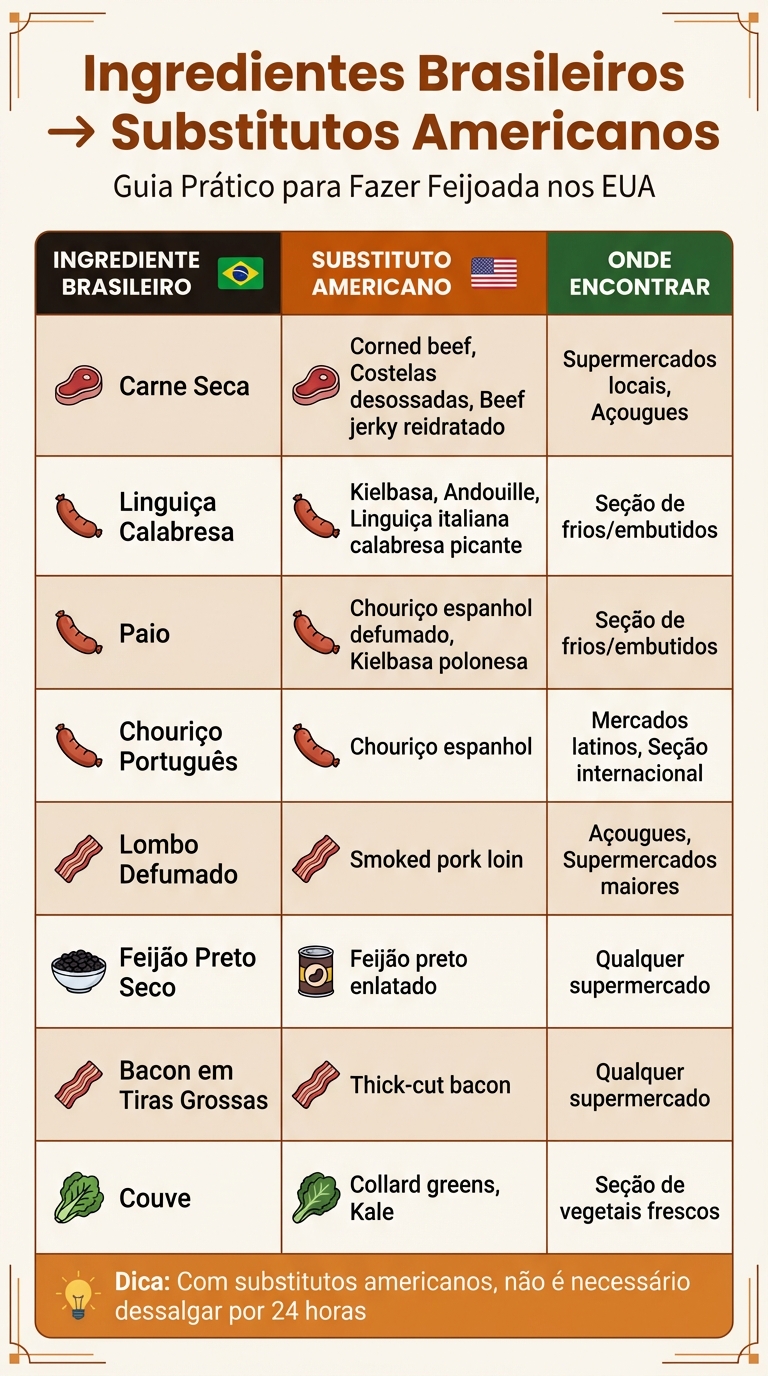
Guide to Substituting Brazilian for American Ingredients for Feijoada
Main Ingredients of Feijoada
The base of feijoada consists of dried black beans and a variety of salted and smoked pork and beef meats. Essential ingredients include carne seca (salted and dried beef), linguiça calabresa, paio, Portuguese chouriço, and cuts such as smoked pork ear, foot, and loin. These elements are crucial for providing texture, fat, and that characteristic smoky flavor. According to Texas de Brazil, the connective tissue and fat from the meats enrich the stew, while the smoky touch intensifies the overall flavor. Aromatics like onion, garlic, bay leaves, and pepper form the base of the seasonings, and thick-cut bacon adds even more complexity to the dish.
With these ingredients in mind, it's possible to adapt the recipe using options available in the United States.
American Substitutes That Work
To recreate feijoada with ingredients found in the US, some practical substitutions can be made. For example, corned beef or boneless ribs are good alternatives for carne seca, offering a similar flavor. Beef jerky can also work, as long as it is rehydrated in hot water. Linguiça calabresa can be replaced by kielbasa, andouille, or spicy Italian calabrese sausage – the latter being the closest in taste and texture. Paio can be substituted with smoked Spanish chorizo or any smoked pork sausage with garlic, avoiding Mexican chorizo due to its spicier seasoning profile. Smoked loin can be easily swapped for smoked pork loin, and thick-cut bacon is widely accessible.
For black beans, the canned version is a good option, especially if added in the last 30 minutes of cooking, ensuring practicality without compromising flavor. Moreover, with meats like corned beef or smoked sausages, there's no need for the 24-hour desalting soak.
Comparative Ingredient Table
| Brazilian Ingredient | American Substitute | Where to Find |
|---|---|---|
| Carne Seca (Dried Beef) | Corned beef, boneless ribs, rehydrated beef jerky | Local supermarkets, butcher shops |
| Linguiça Calabresa (Calabrian Sausage) | Kielbasa, andouille, spicy Italian calabrese sausage | Deli/sausage section |
| Paio (Smoked Sausage) | Smoked Spanish chorizo, Polish kielbasa | Deli/sausage section |
| Chouriço Português (Portuguese Chouriço) | Spanish chorizo | Latin markets, international section |
| Lombo Defumado (Smoked Loin) | Smoked pork loin | Butcher shops, larger supermarkets |
| Feijão Preto Seco (Dried Black Beans) | Canned black beans | Any supermarket |
| Bacon em Tiras Grossas (Thick-Cut Bacon) | Thick-cut bacon | Any supermarket |
| Couve (Collard Greens) | Collard greens, kale | Fresh produce section |
Where to Buy Ingredients in the United States
Local Supermarkets
You can find most of the ingredients needed for feijoada in major supermarket chains across the United States. Stores like Walmart, Kroger, Publix, and Safeway typically carry canned black beans, such as the Goya brand, which costs between $1.59 and $2.29 per 16 oz can. Other basic items like onions, garlic, and bay leaves are also widely available at these chains.
If you're looking for a more traditional touch, check out the Brazilian product options offered by Remembr Store, described below.
Brazilian Products from Remembr Store

For those who insist on the original flavor, Remembr Store is a great option. They offer a selection of authentic Brazilian products, including ready-to-eat frozen feijoada, specific meats for the dish, and traditional accompaniments like farofa. In addition to physical stores in Miami and Weston, Florida, the store also delivers nationwide, with shipping starting at $10.90. This way, you can ensure genuine ingredients without having to visit several different stores.
Step-by-Step Feijoada Recipe
Classic Stovetop Method
Begin by placing 1 pound of dried black beans in a large bowl. Dissolve 1/4 cup of kosher salt in 1 gallon of cold water and soak the beans for at least 8 hours. Afterward, drain and rinse well. If using traditional salted meats, soak them for 24 hours, changing the water 3 to 4 times. Before adding them to the beans, boil for 20 minutes to reduce the salt. If you prefer substitutes like bacon and calabresa sausage, you can skip this step.
In a large pot, brown the bacon over medium heat for about 5 minutes, until cooked but not yet crispy. Add chopped onion and minced garlic, sautéing for another 5 minutes until soft. Set this mixture aside. Add the drained beans, meats, half an orange, and bay leaves to the pot, covering with water until all ingredients are submerged. Cook over low heat for 2 and a half to 3 hours, stirring occasionally, until the beans are tender and the meats shred easily.
When ready, remove the orange and bay leaves. Cut the meats into smaller pieces, if necessary. To thicken the broth, remove a ladleful of beans, mix with the reserved aromatics, and mash to form a paste. Incorporate this mixture into the broth, adjusting the texture to your preference. Taste and adjust salt and pepper, if necessary.
Instant Pot Method

If you want to save time, the Instant Pot is a great option. Start by using the sauté mode to brown the bacon for about 5 minutes. Then, add chopped onion and garlic, sautéing for another 5 minutes while scraping the bottom of the pot to loosen any browned bits. Remove and set aside. If you are using traditional salted meats, place them in the Instant Pot with enough water to cover, close the lid, and pressure cook for 5 minutes to reduce the salt. Drain and set aside.
Next, add the drained beans, reserved meats, half an orange, and bay leaves to the Instant Pot. Cover with cold water, close the lid, and pressure cook on high for 20 minutes. After natural pressure release, add the sausages and, if necessary, more water. Cook for another 15 minutes on high pressure. If the beans are still firm, continue cooking in 5-minute increments until they reach the ideal texture.
To thicken the broth, use the Instant Pot's sauté mode. Remove a ladleful of beans, mash them with the reserved aromatics, and mix into the broth, stirring until desired consistency is achieved. Adjust seasoning with salt and pepper before serving.
sbb-itb-093494e
Accompaniments and Garnishes
After preparing your feijoada, it's time to choose the accompaniments that enhance the flavors of this traditional dish.
Classic Brazilian Accompaniments
A complete feijoada calls for white rice, fresh orange slices, sautéed collard greens, and farofa. These items not only complement the intense flavors of the meats and beans but also help balance the meal. Orange, for example, brings an acidity that aids digestion. The collard greens, cut into thin strips and sautéed with garlic, add a fresh green touch to the dish. Farofa, made from toasted cassava flour, provides a crunchy texture and absorbs the rich feijoada broth.
Other good pairings include Brazilian vinaigrette, a light mix of tomato, onion, bell pepper, and vinegar, and fried cassava, known as yuca in the United States, which is an interesting alternative to traditional french fries. For those who like to start with something special, warm pão de queijo (cheese bread) is always a good choice.
Adapted Alternatives for the US
If you can't find fresh Brazilian collard greens, the collard greens available in American markets are an almost identical substitute. Simply cut them into thin strips and sauté them with garlic and olive oil until tender and vibrant in color.
Farofa can be purchased pre-made at Remembr Store, ensuring authentic flavor and saving time. Cassava root (yuca) is easily found in the fresh produce section of supermarkets, especially in neighborhoods with Latin communities. Cut it into thick pieces, steak fry style, and fry until golden.
And to finish the meal on a high note, nothing beats a Brazilian dessert.
Brazilian Desserts to Complete the Meal
To sweeten the end of the meal, brigadeiros and beijinhos de coco are perfect choices. Brigadeiros, made from chocolate and condensed milk, have a soft texture and are covered with sprinkles. Beijinhos, with their coconut flavor, offer a light and delicious contrast. If you prefer not to make these delights at home, Remembr Store offers ready-made versions, maintaining authenticity without complications. Serve these desserts with strong Brazilian coffee to finish the experience with a special touch.
Tips and Common Mistakes
Tips for Best Results
To ensure tender beans and even cooking, soak the beans for at least 8 hours, changing the water 2 to 3 times during this period. If using salted meats, it's important to soak them for 24 hours, replacing the water 3 to 4 times to remove excess salt.
Want a richer broth? Mash about 25% of the already cooked beans and mix them back into the broth while it's still simmering. This trick releases natural starches, helping to thicken and improve the texture. If the feijoada is still too liquid, leave the pot uncovered and continue simmering for another 20 to 30 minutes to reduce the broth.
Another important point: add the garlic only in the last 30 minutes of cooking. If added at the beginning, the flavor can dissipate during the long simmering time. And remember to adjust the salt only at the end, after all ingredients have released their flavors, especially when using salted meats.
What to Avoid
One of the most common mistakes is adding extra salt before the salted meats have released all their salt into the broth. This can make the dish excessively salty. If you need to correct the salt with potatoes, remove them as soon as they absorb the excess, to prevent them from releasing too much starch into the broth.
Avoid using canned beans as the main base. They cannot replicate the deep flavor that dried beans, slow-cooked with meats, provide. Also, do not add all the meats at once: tougher cuts need more time to cook, while sausages can fall apart if left on the heat for too long. Finally, stir occasionally during preparation to prevent ingredients from sticking to the bottom of the pot.
Conclusion
Making a proper feijoada in the United States is entirely feasible when you understand the fundamentals of this beloved dish. The secret? The combination of smoked and salted meats, even if some substitutions are necessary.
These substitutions work when traditional techniques, such as soaking the meats and slow cooking, are respected. It is in this process that the distinctive flavors of feijoada develop. And, of course, the dish is only complete when served with classic accompaniments: rice, sautéed collard greens, and farofa.
Another essential point is the selection of quality ingredients. For those seeking convenience without sacrificing flavor, Remembr Store is an excellent option. They offer black beans, calabresa sausages, and even ready-to-eat frozen feijoada, with nationwide delivery starting at $10.90. Additionally, they have physical stores in Miami and Weston, Florida, making these indispensable items more accessible.
Preparing a successful feijoada requires patience and attention to detail. By following these tips, you can recreate this Brazilian classic and keep the rich and flavorful tradition it represents alive.
FAQs
What are the best alternatives in the US to substitute carne seca (dried beef) in feijoada?
In the United States, there are some interesting options to substitute carne seca in feijoada. One is beef jerky, which can bring a similar smoky flavor. Another alternative is corned beef, but it's important to desalt the meat before using it to prevent the dish from becoming excessively salty.
You can also opt for beef cuts like smoked ribs or shredded roast beef. These ingredients can bring an intense flavor and evoke the essence of the traditional recipe.
How to use canned beans so they become soft and flavorful in feijoada?
For canned beans to be perfect in feijoada, the first step is to drain and rinse them well. This helps eliminate excess salt and preservatives. Only then, add the beans almost at the end of the feijoada preparation. Let them cook for another 20 to 30 minutes, just enough for them to absorb the seasonings and flavors of the dish, but without overcooking and becoming too mushy.
Where can I buy Brazilian ingredients to prepare feijoada in the US?
If you are in the United States and want to prepare Brazilian dishes, you can find typical ingredients in stores specializing in Latin or Brazilian products. Some local markets offer items such as Brazilian sausage, carne-seca, and other essential meat cuts for recipes like feijoada. Another practical option is to look for these ingredients in online markets that deliver nationwide. If you can't find something specific, consider substitutions that preserve the characteristic flavor of the dish.